
Navigating High School Course Selection With Your Teen (Ontario Parent Guide)
High school course selection can feel overwhelming—for both parents and teens. Many families struggle not because they don’t care, but because the process, language, and long-term impact of course choices aren’t always clearly explained.
As a high school teacher and tutor, I see this every year. Parents want to help their teens make the “right” choices, students want to keep doors open, and everyone feels the pressure of getting it right.
The good news? With the right information, Ontario high school course selection doesn’t have to be confusing.
How Ontario High School Course Selection Works
Course selection varies across provinces, school boards, and even individual schools, which is why your school’s Guidance Counsellor should always be your first point of contact if questions come up—especially if your teen struggles with organization, emails, or deadlines.
In most Ontario schools, course selection happens between December and January. Schools need this time to plan staffing and course offerings for the following year.
Most high schools use an online platform (such as myBlueprint) where students:
View available courses
Check graduation requirements (see the Ontario Secondary School Diploma graduation requirements here)
See prerequisites for future courses
Once selections are submitted, parent or guardian approval is typically required via email.
Prerequisite reminder: A prerequisite is a course a student must complete before taking another course.
Understanding Ontario High School Course Codes
Ontario course codes can look intimidating, but they follow a consistent pattern.
How to Read a Course Code
First three letters: Subject
ENG = English
SNC = Science
Number: Grade level
1 = Grade 9
2 = Grade 10
3 = Grade 11
4 = Grade 12
Final letter: Course pathway or level
If you ever feel unsure, it’s completely okay to look it up or ask—no one has every course code memorized.
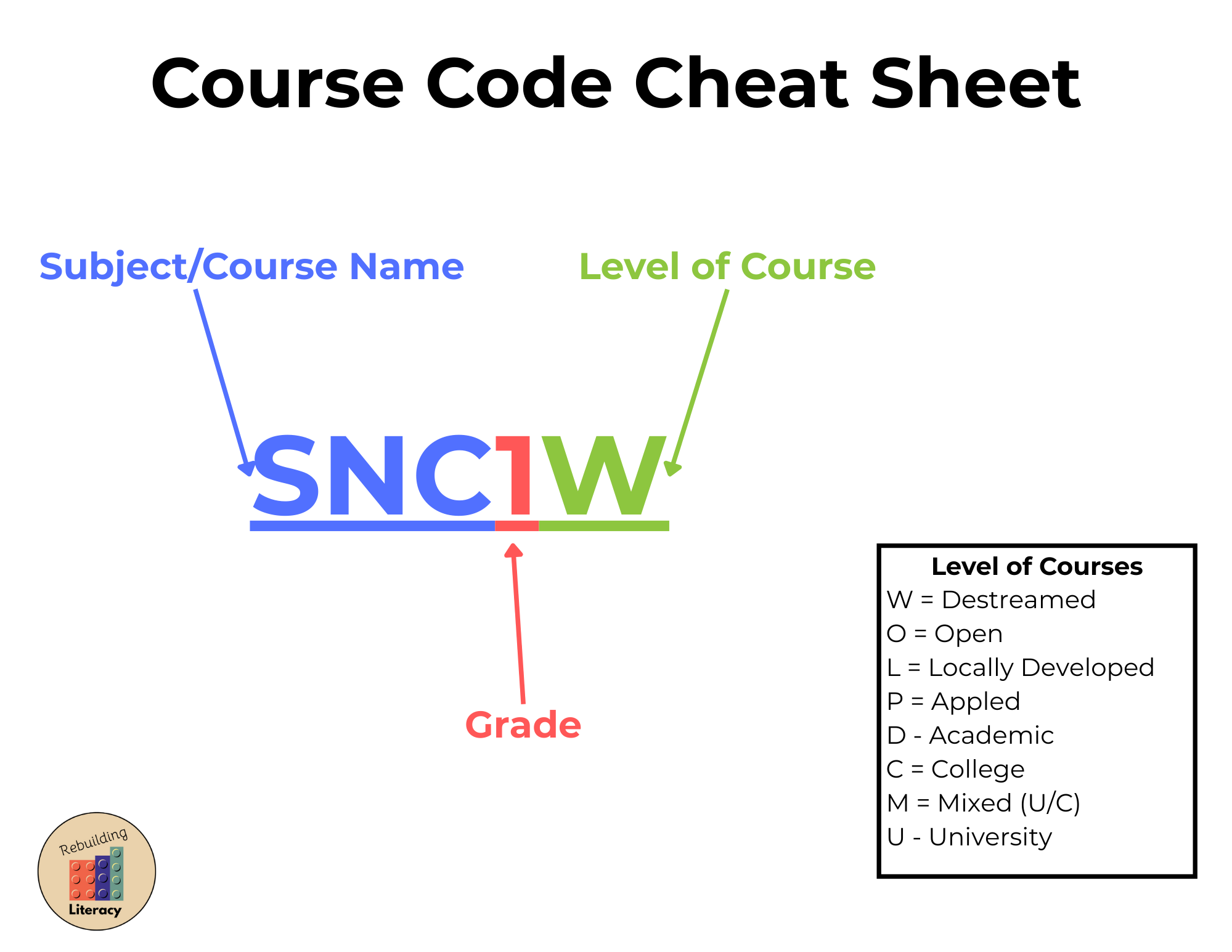
👉 You can download a free Ontario course code cheat sheet here.
Ontario High School Course Pathways Explained
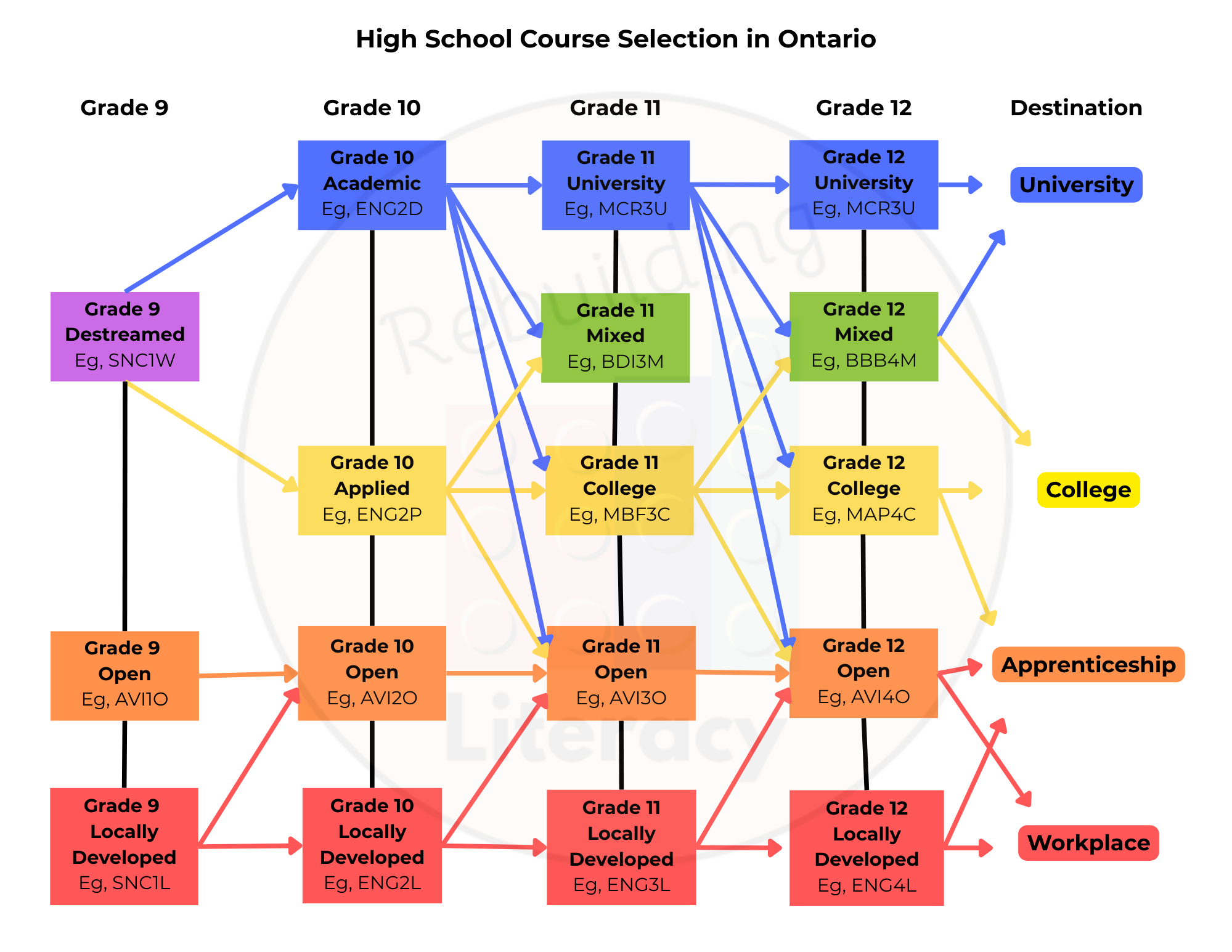
Destreamed (Grade 9)
Destreamed courses are offered only in Grade 9 and are designed to support a wide range of learners, similar to elementary classrooms.
Academic (Grade 10)
Academic courses begin in Grade 10 and are more theory-based and text-heavy. They prepare students for university-level learning and careers that typically require a university degree.
Applied (Grade 10)
Applied courses also begin in Grade 10 and focus on hands-on, practical learning. They are often a better fit for students who:
Learn best through application
Find academic theory challenging
Are considering college or skilled-trades pathways
Open Courses
Open courses are available to all students, regardless of pathway. While useful for exploration, most colleges and universities do not accept open-level courses for admission, so they should be chosen strategically.
Locally Developed
Locally developed courses are designed for students who require significant curriculum modification. These courses typically lead to a workplace pathway, not college or university, and should be selected only after careful discussion with teachers and guidance staff.
College (Grades 11–12)
College-level courses are practical and application-based, preparing students for college programs.
Most college programs require:
ENG4C (Grade 12 College English)
Five additional C or M courses
Mixed (Grades 11–12)
Mixed courses combine college- and university-level expectations and may be used to apply to either pathway, depending on program requirements.
University (Grades 11–12)
University-level courses are academically demanding and theory-focused.
Most university programs require:
ENG4U (Grade 12 University English)
Five additional U or M courses
Why Early Course Choices Matter
One of the biggest misconceptions about high school is that course choices don’t matter until Grade 11 or 12. In reality, early decisions often determine what options are available later.
Course pathways can affect:
Eligibility for future courses
Post-secondary options
Student confidence and engagement
That’s why it’s so important to think beyond the current year and consider long-term goals—even if those goals aren’t fully clear yet.
Tips for Parents Supporting Course Selection
Course selection doesn’t have to be overwhelming when families are informed.
Helpful next steps include:
Reviewing college, university, or apprenticeship requirements in advance
Talking honestly with your teen about strengths and challenges
Encouraging a meeting with a Guidance Counsellor or trusted teacher
Choosing courses that support both success and confidence, not just future eligibility
Worried About Next Semester?
If you already suspect that your teen may struggle next semester—whether due to heavier reading and writing demands, increased workload, gaps in foundational skills, or difficulty staying organized—early support can make a real difference.
I offer one-on-one tutoring for high school students across Canada, providing more than just subject help. My tutoring approach focuses on wraparound academic support, including:
Literacy and coursework skill-building
Organization and executive-functioning support
Ongoing communication with families
A supportive, experienced educator who understands how high school systems work
Supporting students early helps reduce stress, build confidence, and set them up for long-term success—not just higher marks.