
Our Approach
At Rebuilding Literacy, everything we do is rooted in Structured Reading and the Science of Reading. We believe that every learner deserves a strong foundation built on methods proven by research, not just trends or guesswork. Our approach is systematic, evidence-based, and designed to meet the needs of all learners, especially those who have struggled with traditional reading instruction.
What is Structured Reading?
Structured Reading is a methodical, explicit way of teaching reading that ensures students build skills in a logical sequence. Rather than leaving students to “discover” how to read on their own, structured reading provides clear, direct instruction in critical areas like:
– Phonemic awareness (understanding sounds in spoken words)
– Phonics (connecting sounds to letters and patterns)
– Vocabulary development
– Reading fluency
– Reading comprehension
Structured reading follows a carefully planned path where each skill builds upon the last. It breaks reading into manageable steps, allowing students to practice and master one skill before moving on to the next. This approach reduces frustration, builds confidence, and ensures no learner is left behind.
What is the Science of Reading?
The Science of Reading is a vast body of research — from psychology, cognitive science, education, and neuroscience — that shows how people learn to read and how reading should be taught. It is not a single program or method; rather, it is a collection of evidence that points toward the most effective ways to teach reading.
Research from the Science of Reading highlights that:
– Reading is not a natural process; it must be taught.
– Phonemic awareness and phonics are essential starting points.
– Language comprehension is equally important and must be developed alongside decoding skills.
– Instruction must be systematic, explicit, and cumulative to be most effective for all learners, especially those with dyslexia and other reading difficulties.
Image Source: Foundations A-Z, Research and Rationale Overview (foundationsa-z.com)
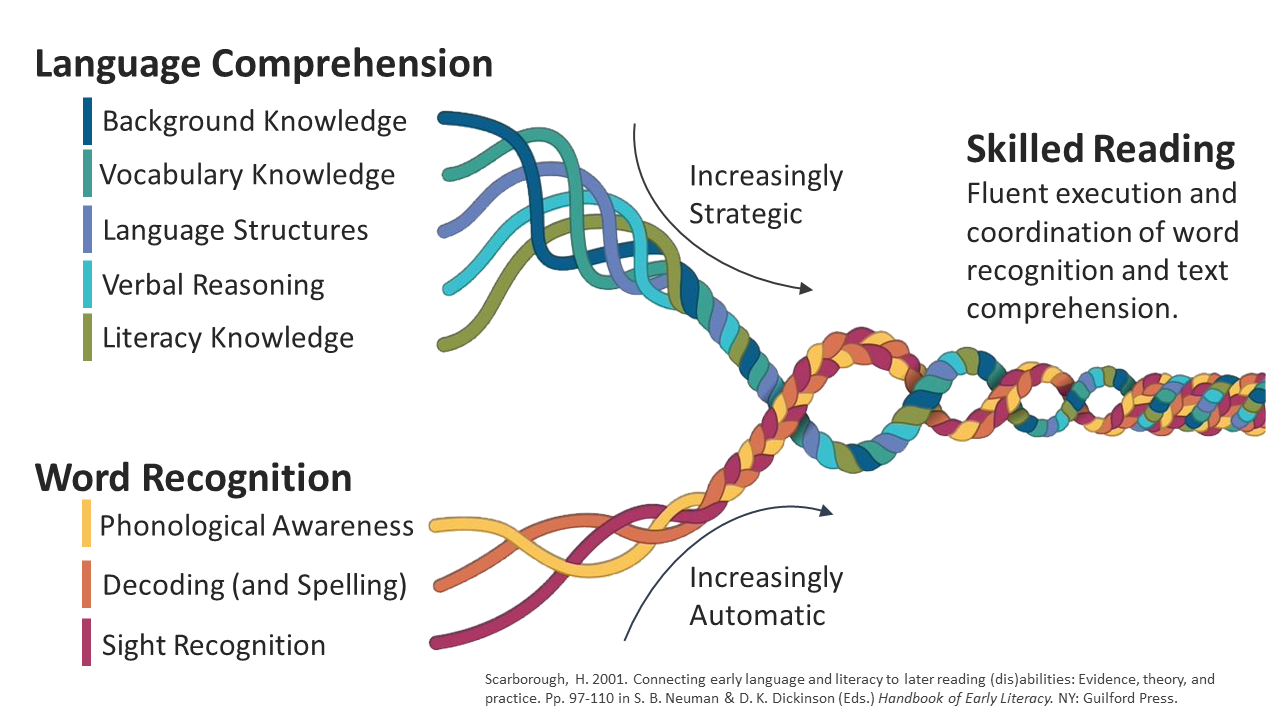
How Structured Reading and the Science of Reading are Connected
Structured Reading is the application of the body of research called the Science of Reading.
At Rebuilding Literacy, we use the insights from decades of research to inform every lesson, every activity, and every strategy we use. Structured Reading puts the Science of Reading into action by providing a clear, step-by-step method for building skilled, confident readers.
In short:
– The Science of Reading is a body of research that tells us what works.
– Structured Reading shows us how to make it happen.
When these two are combined, students are empowered with the tools they need to become successful, independent readers — often for the first time.
The Rebuilding Literacy Framework: 4 Key Pillars to Strengthen High School Reading
If your high school student struggles with reading, you’re not alone — and there is a clear path forward. The Rebuilding Literacy Framework is designed to help students become more confident, capable readers through personalized, practical support that fits real classroom demands.
This framework focuses on rebuilding skills step by step, while keeping learning age-appropriate, encouraging, and achievable.
Every student’s reading journey looks different. The first step is identifying your child’s strengths and areas that need support.
Your student will be assessed in a low-pressure way to understand their:
Decoding skills
Reading comprehension
Fluency
Vocabulary knowledge
What this means for families:
Support is targeted and personalized, not one-size-fits-all. Time is spent where your child needs it most.
Students are explicitly taught how to read more effectively — not just expected to figure it out on their own.
Support includes:
Step-by-step strategies for understanding texts
Vocabulary development
Support with complex reading tasks in subjects like English, history, and science
What this means for families:
Students gain tools they can use independently in class, on assignments, and during exams.
Many students who struggle with reading have lost confidence or interest over time. Reading should feel relevant and meaningful — not frustrating.
Your student will work with:
High-interest, age-appropriate texts
Topics connected to real-world interests, career paths, or hands-on learning
What this means for families:
Students are more willing to participate, take risks, and re-engage with reading.
Students are encouraged to reflect on their learning and recognize their progress over time.
This includes:
Setting realistic goals
Monitoring improvement
Celebrating successes, big and small
What this means for families:
Students build confidence, motivation, and a stronger belief in their ability to succeed.